Yves here. As readers have likely worked out, I view Make American Healthy Again to be a con, confirmed by the fact that RFK, Jr. has copyrighted the label and collects licensing fees for its use. MAHA claims to be more natural and healthy, yet also hearts meat-eating, when the planetary cost of going up the food chain is high and should be discouraged, plus studies have consistently shown that vegetarian and plant-dominated diets are healthier than meaty ones.
By Brian Bienkowski, the managing editor of The New Lede who previously was the senior editor of Environmental Health News for nearly a decade where he oversaw the newsroom and two regional bureaus and was also the founder, producer and host of the Agents of Change in EJ podcast. Originally published at The New Lede
Last month meat lovers descended on Gatlinburg, Tennessee, to bond over brisket, bacon, butter and the carnivore lifestyle at Meatstock 2026.
The event was full of kitsch apparel, various raw milks, and (of course) big juicy steaks, but amidst the meat evangelists were major political power players — from Calley Means, a senior advisor for the United States Department of Health and Human Services (HHS), to the “Food Babe” Vani Hari, who has frequently visited with White House officials to advocate for ridding our food supply of artificial dyes and pesticides.
The MAHA movement is broad and varied, with several advocacy causes — ranging from reducing ultra-processed foods and pesticide use to vaccine skepticism — but one is fairly consistent: Americans need to eat “real food” and that includes meat. This mantra is not just a social media trend, it is now woven into federal nutrition and health policymaking.
“It culminated in this union between Bobby Kennedy and President Trump and, wherever you are on the political aisle, that has created this unique societal moment where this is at the top of the national discussion,” Means said during the May 2 panel discussion at the Meatstock.
Means and others in the MAHA movement frequently champion getting away from “industrial farms” and embracing regenerative farming, a concept that prioritizes soil health and practices such as the planting of cover crops, reduced tillage, and pasture-raised animals.
But Meatstock 2026 attendees, federal MAHA Commission reports and meat-loving influencers face a challenging truth: current and future meat demand depends almost entirely on massive concentrated animal feeding operations, CAFOs, which now raise nearly all farmed animals in the US.
And while the movement has long railed against harmful pesticides — such as glyphosate and paraquat — that are sprayed on crops and linked to cancers and other health ills, there is mounting evidence that CAFOs, which generate massive amounts of manure, are linked to some of these same health problems, including increased cancer rates.
The pollution toll has largely escaped MAHA criticisms.
“I reject the idea that we only have two options: factory farming or eliminating animal protein,” Hari told The New Lede. “No single model will solve every challenge, but innovation should be focused on improving outcomes rather than simply maximizing volume.”
But several experts say the dietary guidelines and an overall emphasis on bolstering meat eating will only lock in CAFOs, and many of the harmful impacts.
“We can’t sustain the amount of animal products that Americans are consuming right now, let alone more, without the industrial model,” said Brent Kim, an assistant scientist at Johns Hopkins Bloomberg School of Public Health.
Supply and Demand
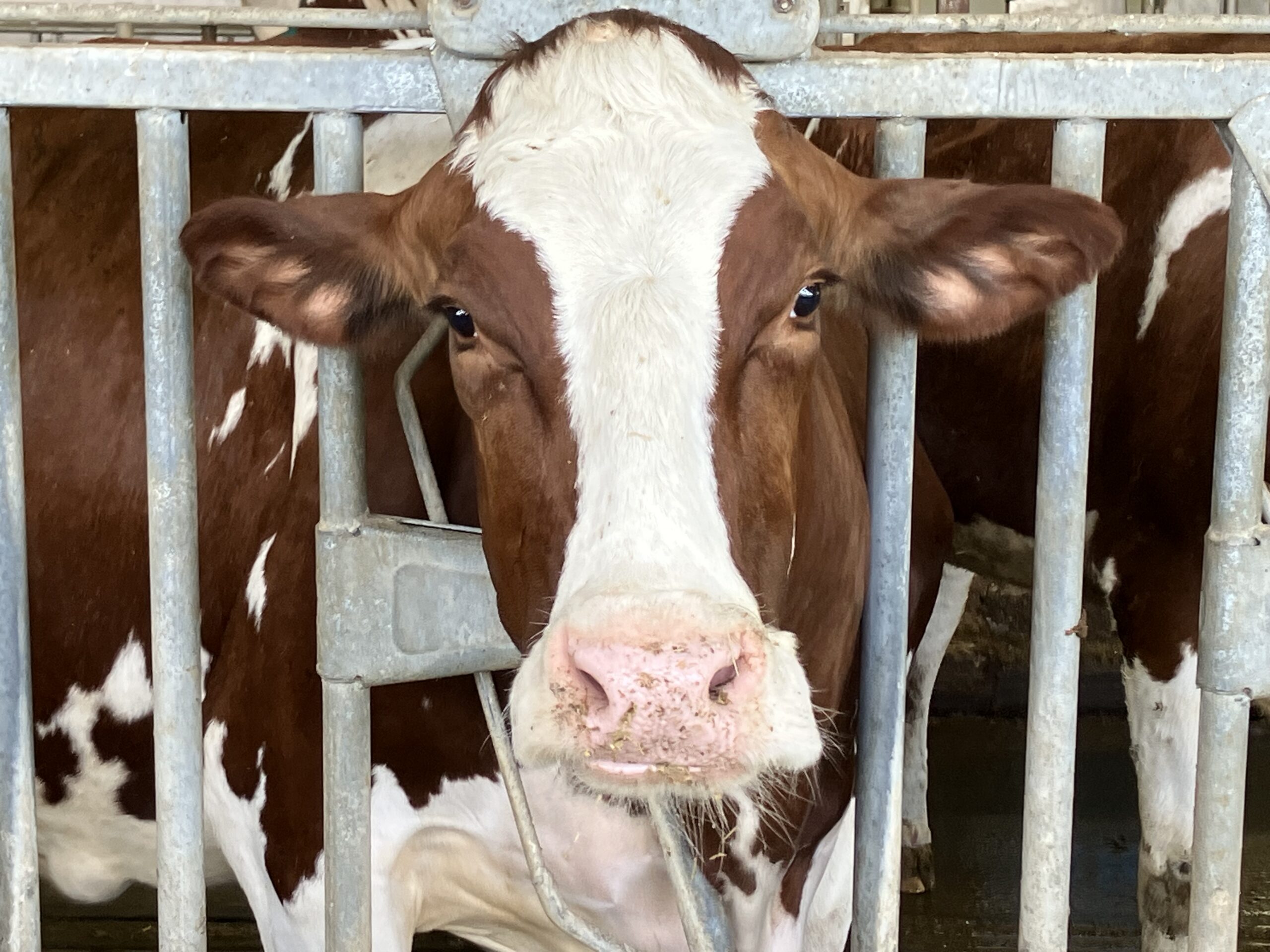
Nearly all meat from chickens and turkeys, 75% of cow beef, and over 98% of meat from hogs comes from CAFOs, according to an analysis of USDA data.
And researchers have found that a switch to grass-fed or regenerative practices would struggle to meet the current — let alone increased — meat demand.
A study on US beef production, for example, found that “all of the pastureland that US beef currently uses can sustainably deliver 45% of current production.” A prior study was more pessimistic, estimating that current pastureland grass could support just 27% of the current beef US supply. And separate research in 2020 found regenerative beef production requires up to 2.5 times more land than conventional production.
Scientists found pasture-based chicken farming would, too, require an untenable increase in land use.
The unappetizing data on meat production was absent from The Make Our Children Healthy Again Assessmentreleased last year, other than a reference that four companies control 80% of the market. Meat featured prominently, however, in the new US dietary guidelines released in January that emphasized protein from animal products. Kennedy Jr. said the guidelines would “revolutionize” the nation’s food culture.
The dietary guidelines and broader MAHA recommendation of heavy meat consumption have raised alarm among some doctors and health experts, who say meat, especially processed or red meat, is linked to increased risk of heart disease and certain cancers.
“It’s like the tobacco growers who for generations were raising tobacco until us killjoy scientists came out of here and said, “Wait a minute, tobacco causes cancer. So does meat … and it also causes heart disease and many other issues,” said Dr. Neal Barnard, president of the Physicians Committee for Responsible Medicine.
The dietary guidelines’ protein push “is really about red meat,” said Marion Nestle, nutrition expert and New York University professor. “There are other kinds of proteins, but the guidelines dismiss the quality of proteins from other sources.”
Means and other MAHA meat evangelizers point to the health benefits, including protein, omega-3s and healthy fats. Several speakers at Meatstock talked about how a diet focused on real foods — with meat taking center stage — bolstered their health.
“I cut out all processed foods and I went to meat and vegetables and some fruit … and it just transformed my health in like a month,” podcaster Mikhaila Peterson said during the MAHA panel at Meatstock.
Peterson said the dietary change helped put her arthritis and chronic fatigue into remission. Some studies suggest that a low-carbohydrate, high-protein diet can help reduce arthritis and related inflammation.
In addition to crediting meat, the MAHA coalition slams ultra-processed foods and pesticides as playing a role in chronic disease prevalence.
“Ultra-processed foods and chemical exposures remain among the largest and most immediate concerns because they affect nearly every American every day and are strongly associated with chronic disease trends,” said Hari.
Many people in the MAHA movement promote non-industrial farming for meat. The USDA last year launched a $700 million investment in a regenerative farming pilot program, with Agriculture Secretary Brooke Rollins calling it “another initiative driven by President Trump’s mission to Make America Healthy Again.”
“In the US, people like meat. They want it to be cheap,” said Dan Blaustein-Rejto, director of food & agriculture at the Breakthrough Institute. “To actually shift it to a different system would restrict supply. We simply wouldn’t be able to meet current demands.”
Kim said there is “absolutely room for animals in a sustainable food system.”
“But this sort of insatiable appetite for animal foods in the US is far beyond the capacity of what could be sustained with any of these more nature-based approaches,” he said.
HHS did not return requests for comment on how CAFO fit into the MAHA agenda.
The “Political Courage Is Lacking”
CAFOs produce massive amounts of manure that can pollute local waterways with nitrate. Exposure to nitrates can cause dangerously low oxygen in babies’ blood, causing what’s known as “blue baby syndrome,” and is also linked to several cancers, including bladder, ovarian and colorectal cancers.
And this CAFO-generated nitrate pollution is increasingly linked to widespread health issues. In Iowa, which leads the country in number of CAFOs, a report released in March found that nitrates from excessive animal manure, in addition to pesticides and other contaminants, is a culprit in the state’s rising cancer rates. In late May, Des Moines’ water utilityasked residents to cut back on water use because nitrate levels are so high in the drinking water supplies that the utility is having a hard time treating the nitrates in the water.
In another large CAFO study in April, Yale researchers found people living near concentrated animal feeding operations, or CAFOs, in California, Texas and Iowa suffer from higher rates of cancer.
More than 80 health and environmental groups recently sent a letter pleading with HHS and the US Environmental Protection Agency (EPA) to use emergency powers to protect Americans from a “public health emergency” driven by industrial farming practices that are dangerously polluting drinking water. CAFOs are also major emitters of air pollution to nearby communities, including contributions to the formation of particulate matter, which is linked to breathing and heart problems.
Nestle said people’s sense of risk is behind why things like pesticides and food dyes are vilified while CAFO’s negative health impacts are often less scrutinized.
“Everybody knows what animals are so, in their mind, animals are okay,” she said. “Few people know what chemicals are, so, in their mind, chemicals are not okay.”
CAFO impacts aside — US meat eating is at record levels. An annual Food Industry Association survey showed that the vast majority of Americans view meat as part of a healthy diet and that meat sales hit a record high in 2025, reaching $112 billion.
Zen Honeycutt, founder and executive director of Moms Across America, which has championed MAHA causes, told The New Lede that this spike in meat eating is in part due to “concerns that Big Ag created” including pesticides on vegetables and ultra-processed foods.
Honeycutt, who was the opening speaker at Meatstock and advocates for organic, regenerative meat, acknowledged that this rising meat demand “is problematic for pastureland and resources that are decreasingly available.”
“I believe most people should be consuming meat, but our ability to produce that meat is a challenge that needs to be addressed with humane and ethical-decision making,” she said.
“CAFOs are one of the major problems in the food supply that are ignored by this and every administration beforehand,” she added. “There has to be a better way.”
There has been some MAHA advocacy around industrial meat. Honeycutt said her organization is advocating for the Senate to remove a provision in the current House-passed Farm Bill that bars state or local governments from having welfare protections for animals at farms – including CAFOs – or those sold within the state that differ from other states’ rules.
Hari said though MAHA’s focus has been largely on pesticides and ultra-processed foods, the movement has had a “cultural impact” on meat production.
“Steak n’ Shake … was using conventional meat, is now going 100% grass-fed — that’s a positive change against factory farmed meat,” she said. “A major fast food chain adopting this policy has ripple effects across the industry. One chain is a start — but it is certainly not enough.”
Both Hari and Honeycutt, separately, stressed that there have been several issues with the Trump administration — including its stance on the weedkiller glyphosate — that they have disagreed with.
MAHA is a “group of very independent minded people,” Hari said. “We have different methodologies on how we approach diet and nutrition but one thing we all agree on is that the American people need to eat more real food.”
She added that she hopes the MAHA movement can increasingly focus on meat production and its environmental and health toll, but that “the political courage is lacking right now.”


As Marion Nestle says mid-essay, this push is for red meat. Which isn’t going to work out. (And what’s with the term “cow beef,” when so much of beef is from steers (beef guys)?)
Noting:
Americans need to eat “real food” and that includes meat. This mantra is not just a social media trend, it is now woven into federal nutrition and health policymaking.
There are many problems with “meat” that have been thrown into high relief as I eat in Piedmont. U.S. culture has an increasingly limited idea of what “meat” is. If you have any older U.S. cookbooks, especially from the first half of the twentieth century, you’ll see recipes for making sausage, cooking kidneys, mincing chicken livers, stewing tripe, simmering pig’s feet, and cooking the many cuts of lamb. And veal, which can no longer be eaten in the U S of A, for various reasons. Did I mention beef tongue?
Most of this variety is gone from the U.S. diet. It’s beef. Chicken. And some kinds of pork, but not all. Many chicken breasts, chicken thighs, and various roasts and chops.
Meanwhile, in Piedmont, because of the problems of what meat is and because of the influence of SlowFood in preserving domesticated species, I regularly see: lamb, veal, duck, turkey, chicken, capon (especially for Christmas), snout-to-tail use of the pig, guinea fowl, rabbit (a local delicacy). I had breast of guinea fowl last Saturday at a delicious lunch – glazed and with raspberries as a garnish.
Also in Piedmont and much less often: Horse (once or twice, although horse is served regularly in other regions). The occasional wild boar (more likely in certain other regions).
And there is a tripe festival in the adjacent city of Moncalieri. The Italians still eat the quinto quarto, although gentrification means less so: Roma is famous for these “organ meats.” Things like beef cheek and hog jowl that in the U S of A turn up only in the cookery of black folk.
Yes, there are problems in Italy with concentrated animal-abuse feeding operations, but because supply chains in Italy are much shorter, it is harder to justify a CAFO.
Insomma, the U.S. diet isn’t going to change. It is going to get more and more restricted and more and more industrialized. The repertoire of meats in the U S of A is limited –- the offerings of seafood in the U S of A are even more limited than what I see here. The trend has been: More fat, more salt, more processing, more long-distance shipping, more calories, less home cooking.
And if we’re going to talk about real food, we have to talk about our duties to animals, as Nestle reminds us in the essay. I note that today’s antidote over at Links is the world’s cutest duckling. I eat duck – and I offer up a little prayer of thanks to the animal each time (not often) that I cook duck.
The American population can start eating the feral hogs that are coming down from Canada. And the ones tearing up the south.
This whole post sounds kinda weird because of the people involved. And I mean Meatstock? As in Woodstock? Really? I kept on waiting for mention of the American National Hot Dog and Sausage Council. And yes, that is a real organization.